 Tax Return PerthTax Return Perth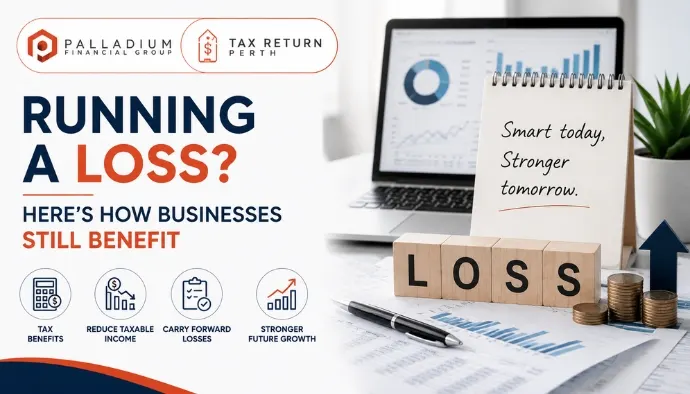
Running a business at a loss can feel like a setback, but in reality, it’s often part of a strategic growth phase. Many businesses across Australia—especially in Perth—experience losses during their early years or while scaling operations.
The important thing is not just the loss itself, but how you manage and use it from a tax and financial perspective. With the right approach, a loss can actually create long-term advantages.
A business runs at a loss when its total expenses exceed its income for a financial year. This situation is quite common, particularly for startups or businesses investing heavily in growth.
In cities like Perth, businesses in sectors such as construction, hospitality, and professional services often face temporary losses due to upfront costs and market competition. These losses are not always negative—they can reflect calculated investments in the future.
One of the biggest advantages of running at a loss in Australia is the potential tax benefit. Depending on your business structure, losses can be used to reduce your taxable income.
For sole traders and partnerships, losses may sometimes be offset against other income sources like salary or investment earnings. This can result in a lower overall tax bill or even increase your refund.
However, this depends on specific ATO rules, which is why professional tax return services play an important role in ensuring everything is handled correctly.
If you’re unable to use your losses immediately, they don’t go to waste. Australian tax rules allow businesses to carry forward losses and apply them to future profits.
This means when your business starts generating income, those earlier losses can reduce your taxable profit. Over time, this can significantly lower your tax liability and improve cash flow.
This strategy is especially beneficial for growing businesses that expect profitability after an initial investment phase.
Consider a small Perth-based startup that invested heavily in marketing and operations during its first year. The business recorded a significant loss, but instead of seeing it as a failure, the owners treated it as part of their growth strategy.
When the business became profitable the following year, those carried-forward losses helped reduce taxable income. The result was a noticeable tax saving, which allowed them to reinvest back into the business.
This kind of outcome is common when losses are managed with proper planning and guidance.
In Australia, not all business losses can be immediately used to offset other income. The ATO applies non-commercial loss rules to ensure losses are genuine and not used to reduce tax unfairly.
You may be able to claim losses if your business meets certain criteria, such as generating a minimum level of income or passing specific tests set by the ATO. If these conditions are not met, the losses are deferred and carried forward.
Navigating these rules can be complex, which is why many businesses rely on experienced tax accountants in Perth to ensure compliance and maximise benefits.
Not all losses indicate poor performance. In many cases, they reflect intentional decisions aimed at long-term success.
For example, a business may run at a loss because it is expanding operations, hiring staff, or increasing its marketing efforts. These are strategic moves designed to build a stronger foundation for future profitability.
Understanding the difference between a temporary, growth-driven loss and an unsustainable financial position is essential for making informed decisions.
While losses can offer benefits, many businesses fail to take full advantage of them due to avoidable mistakes.
These issues can reduce the value of your losses or even attract unwanted attention from the ATO.
To turn a loss into a strategic advantage, businesses need a proactive approach rather than a reactive one.
A well-planned strategy includes proper tax planning, choosing the right business structure, and regularly reviewing financial performance. These steps help ensure that losses are used effectively and aligned with long-term goals.
Working with professionals like Tax Return Perth can make a significant difference. Their expertise in business tax return preparation and planning ensures that losses are not just recorded, but optimised.
Although losses can be beneficial, there are situations where they may indicate deeper issues. If losses continue for several years without a clear path to profitability, or if cash flow becomes difficult to manage, it may be time to reassess your strategy.
Seeking expert advice at this stage can help identify whether adjustments in operations, structure, or tax planning are needed.
Also read: What is Tax Fraud and What are the Penalties for Tax Fraud in Australia?
Running a loss is not necessarily a negative outcome. In many cases, it’s part of building a successful and sustainable business.
The key lies in understanding how to use those losses effectively. With the right strategy, businesses in Perth and across Australia can reduce tax, improve future profitability, and create long-term financial stability.
Instead of viewing losses as a problem, it’s more accurate to see them as an opportunity—one that, when managed correctly, can deliver real financial benefits.